Looking after your wooden climbing hangboard
Article updated on .
A wooden hangboard that is stored and looked after properly can last aaaaages!!! If it is exposed to big temperature swings, to damp … it will degrade much faster.
The good news: maintenance comes down to a few simple habits, with no miracle product and no exotic kit. Here is what to do, and above all what not to do.
Day to day: let the wood breathe
A hangboard needs very little care. What damages it is the wrong habits, more than the absence of any. 3 habits are enough.
- “Clean” hands before using the hangboard. The essential thing is to avoid leaving anything greasy on the wood: you don’t climb straight after working on the car or eating crisps.
- Avoid standing water. If your hangboard lives outside or in a garage, check that it is not left in contact with a damp surface. Moisture makes the wood move and the board degrades faster.
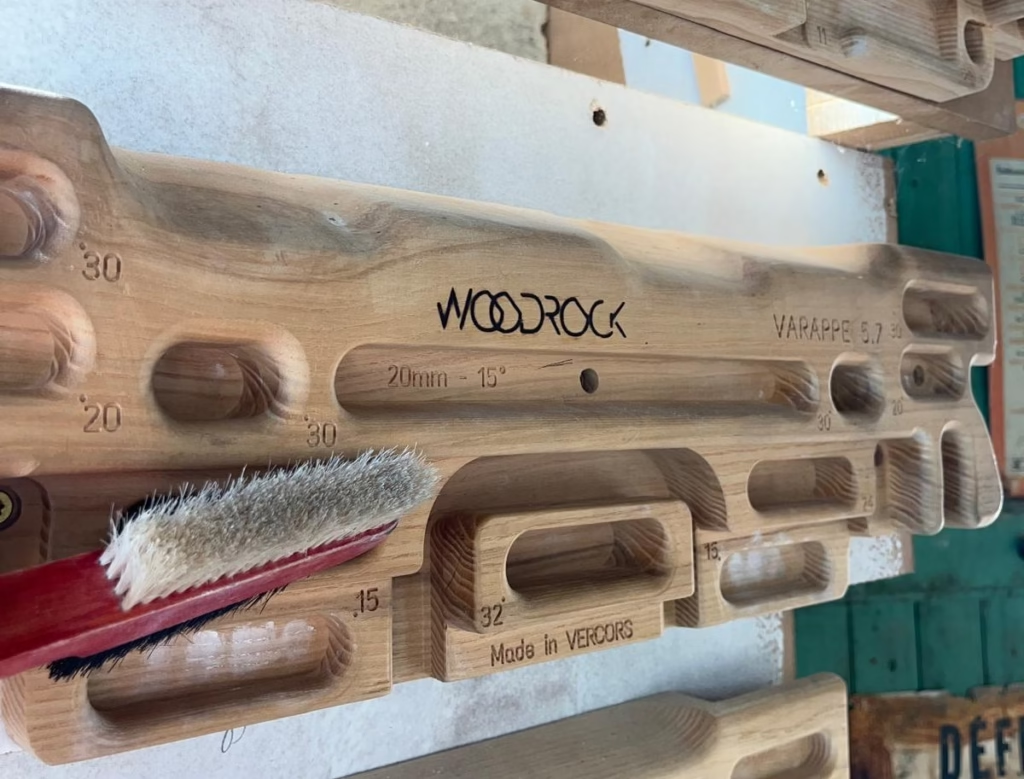
- Brush it regularly. An occasional going-over with a brush limits the build-up of chalk in the pores of the wood. If too much chalk accumulates, the holds lose their grip.
The occasional clean
When you feel the board is caked in chalk, a more thorough clean can be useful:
- Dry brushing/sanding. With a brush harder than a climbing brush, pressing more firmly, or even with sandpaper between 100 and 120 grit. Below 100, the paper digs into the hold and re-textures the surface. Above 120, the wood goes too smooth and becomes very slippery.
- A barely damp sponge (lukewarm water, nothing else). If on top of the chalk the board has gone “greasy” from sweat left on it, you can wipe it down with lukewarm water. You wipe, you don’t wash. The sponge must be wrung out.
- Dry it immediately with a dry cloth, then leave it 24 hours in the open air before the next session. Possibly another light sand: the water will have raised the wood fibres, and sanding brings the grip back.


To avoid: any greasy product, and anything that could damage the wood and its texture over time.
Some brands recommend cleaning with sprayed alcohol followed by brushing. Alcohol dissolves the skin’s sebum and evaporates without swelling the fibre, where water raises the grain. Worth a try, but personally I have never needed to go that far.
When the grip drops off: a light sand
After a few months of heavy use, you may feel the holds going a bit slick. That is normal: skin and chalk polish the fibre. The fix takes 5 minutes.
Dust it off carefully with a brush first, then a few passes of 100 to 120 grit sandpaper with the grain, lightly, just to wake the surface up.
Should you oil it?
In my view, no. My hangboards leave the workshop with no oiled finish, so as to keep the touch and the grip that belong to the wood itself. A finish lowers the grip, and over time it could create a difference in texture between the worn areas and the little-used ones, a bit like a polished route.
How long a well-maintained hangboard lasts
With the care and attention described above, a Woodrock hangboard can last a lifetime. The ones I made when I was starting out (not the best made, and not the best looked after) are still perfectly usable more than 8 years on.
Frequently asked questions
Should you use chalk on a wooden hangboard?
YES! Preferably plain powdered chalk, as it limits the sweat and grease reaching the wood.
BUT! : sometimes, if the air or your skin is too dry, it can also reduce how well skin sticks to the wood (the eternal soft-skin, hard-skin debate …). So adding a bit of moisture can make sense too, but it depends when, where, who … in short, a dilemma worthy of a conversation about conditions and skin. So it is up to you to run the tests and see what suits you best.
My hangboard creaks a bit, is that serious?
No. The creak almost always comes from the fixings (wall plugs, screws or door bracket) flexing slightly under load, not from the wood itself. Check how tight the fixing is.
The wood has changed colour, is that normal?
Entirely normal. Wood darkens or lightens slightly with light, ambient humidity and the patina left by skin. It is even a sign that the tool is living alongside you.
Can you install a wooden hangboard outdoors?
Outdoors, the hangboard is more exposed to temperature swings, humidity and UV: it will therefore age faster. To limit that, cut down the exposure time (with a portable hangboard you simply bring it in after each use), or failing that shelter it from the sun, from temperature swings and from damp.
A propos de l’auteur
Woodrock c’est le mariage de 2 passions : la menuiserie et l’escalade. Concevoir, fabriquer, usiner et vous envoyer des poutres d’escalade de qualité est une partie de mon quotidien. Le reste du temps, j’aime grimper sur les falaises des contreforts du Vercors.